Agents Start 40% of Pull Requests. Who Owns the Merge?
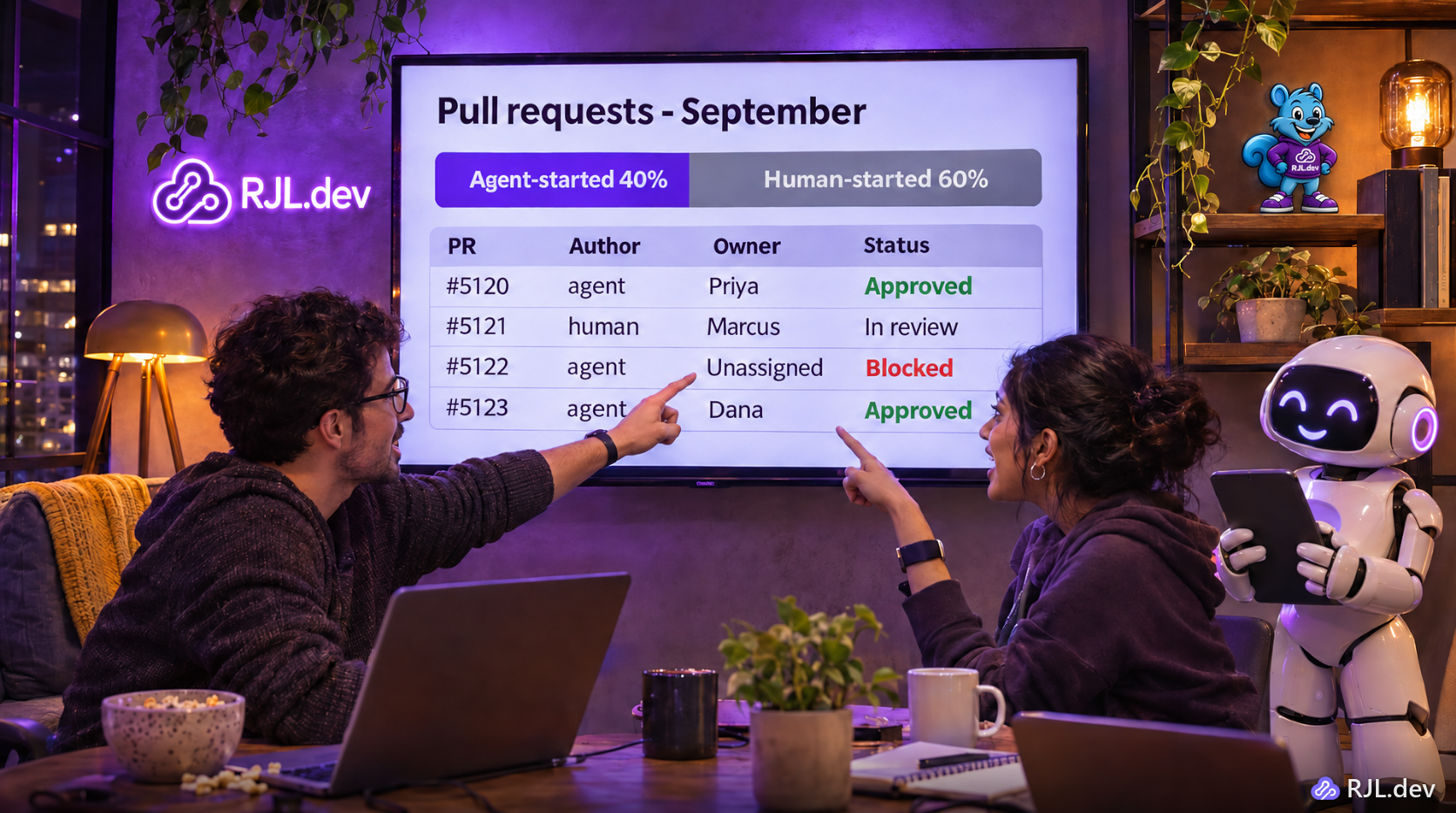
GitHub's Octoverse 2026 report says that by September 2026, more than 40% of pull requests on GitHub started with an agent's first draft. In March it was 17%. That is 110 million agent-started pull requests in a single month.
A year ago the headline was volume: a million agent pull requests in five months. This year the headline is share. Agents are no longer extra traffic on top of the human workflow. They are four in ten of the workflow.
That changes the question I ask first in any engineering organization. Not "are you using agents?" but "when an agent opens the pull request, whose name is on the merge?"
Hire Me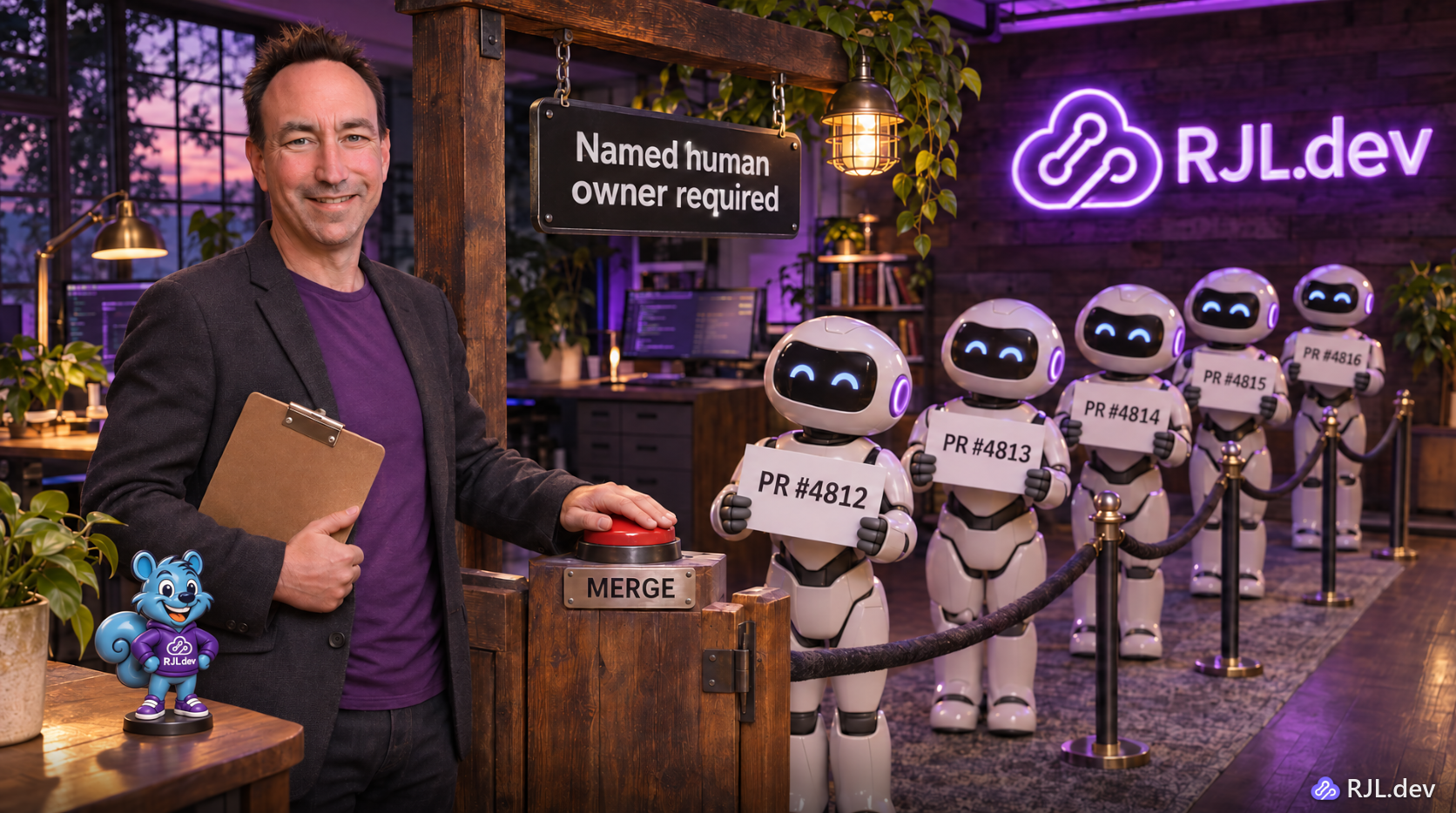
Speed Without Delivery
Faros AI's third report in this series, the Q3 2026 "Speed Trap" edition, covers the latest twelve months of telemetry from 22,000 developers across 4,000 teams. Its framing is the one I would have picked: organizations are optimizing for faster code creation while the costs of verification, remediation, and operations pile up downstream.
The numbers behind the framing: average PR size up 71.8%. Time in QA up 300.6%. Monthly incidents up 125.4%. And pull requests merged with no human review up 76.3%, more than double the 31.3% rise Faros reported in April. Task throughput, meanwhile, remains strong. Every upstream number looks like success.
There is one genuinely better number. Incidents per pull request rose 14.5%, down from the 242.7% increase in the April report. Teams are learning. But there are far more pull requests, so the total incident load still more than doubled.
"Put the two reports side by side. Agents start four in ten pull requests, and unreviewed merges are climbing. That is not a productivity story. It is an ownership gap with a velocity chart attached."
The full history of the Faros series, and the three branches an organization can take from it, is in Authoring Is Cheap. Verification Is the Constraint.
"The Author Owns It" Stopped Working
Most review processes rest on an unwritten rule: the person who wrote the change understands it, defends it in review, and gets paged when it breaks. The reviewer is a second pair of eyes, not the owner.
An agent-started pull request breaks that rule quietly. The author is a process. It cannot be paged, it will not remember the change next week, and it cannot explain why the code is shaped the way it is. If the reviewer is also skimming because the queue is long, the change has no owner at all. It merges anyway, because the tests the same agent wrote are green.
My answer is simple to say and harder to enforce: the human who dispatched the agent owns the merge. Not the agent, not the reviewer, not "the team." One named person who asked for the work and answers for it in production. It is the same principle as Driver, Not Doer, applied to the pull request.
- Agent identity in every commit. Agent-started work is labeled as such, so you can measure it separately and route it on purpose. If you cannot tell agent pull requests from human ones in your own repository, you cannot manage either.
- A named owner field that blocks the merge when empty. Branch protection already blocks a merge without an approval. Block it without an owner too. "Unassigned" should be a red status, not a default.
- Code owners apply to agents. An agent touching the billing module gets the billing module's reviewers, exactly like a new hire would. Agents do not get a side door.
- Size caps, enforced in the pipeline. A forty-file agent pull request does not get reviewed, it gets approved. Whoever dispatched the agent splits it before a human is asked to read it. The thresholds I start with are on the developer experience page.
- No merge without a human who read it. An AI reviewer is a useful first pass. It is not the approval. The unreviewed-merge number Faros reports is the number this rule exists to keep at zero.
Five Numbers to Measure This Quarter
Agent Share of Pull Requests
Your own number, not GitHub's. If it is near 40% and nobody in leadership knew that, the rest of this list matters more than you think.
Merged With No Human Review
The count of pull requests that reached the main branch without a person approving them. The target is zero, and the trend matters more than the level.
Incidents and Reverts by Author Type
Incidents and reverts per agent-started pull request against per human-started pull request. This is the honest test of whether the agents got better or the review got thinner.
Review Time per Changed Line
Split by author type. If agent pull requests are bigger and get reviewed faster than human ones, that is not efficiency. It is a queue being cleared by lowering the bar.
Owner Coverage
The share of merged pull requests with a named human owner recorded on the pull request itself, not inferred from whoever clicked the button. The target is all of them.
What the Evidence Says
- "By September 2026, more than 40% of pull requests on GitHub started with an agent's first draft, up from 17% in March." That was 110 million in September alone. GitHub counts only agents it can detect and calls the figure a floor. By September, 90% of agent pull requests merged within two weeks against about 86% for the rest, and about 87% of agent-started pull requests changed multiple files against 79%. GitHub Octoverse 2026 (source dated 2026-10; verified 2026-11)
- Across 22,000 developers and 4,000 teams, Faros measured average PR size up 71.8%, time in QA up 300.6%, monthly incidents up 125.4%, and PRs merged with no human review up 76.3%, while incidents per PR rose 14.5%, down from 242.7% in the prior report. Faros AI, The Speed Trap (AI Engineering Report Q3 2026) (source dated 2026-09; verified 2026-11)
- The prior Faros report, in April 2026, put the rise in PRs merged with no human review at 31.3%, with a quarter of all PRs reviewed by an AI agent instead of a person. Faros AI, The Acceleration Whiplash (source dated 2026-04; verified 2026-09)
- Qodo's own product data shows that once an AI code review tool is enabled, 80% of pull requests receive no human comment at all. Qodo, State of AI Code Quality (source dated 2025; verified 2026-11)
- GitHub put Copilot code review approvals into public preview: when enabled, a Copilot approval can count toward a repository's required-approvals rule. GitHub Changelog, Copilot code review can now approve pull requests (source dated 2026-09; verified 2026-11)
What I Do About It
When I come into an engineering organization as a fractional CTO or to fix developer experience, the first month is not a tool decision. It is instrumentation and one rule. I get the five numbers above onto a dashboard leadership actually reads, I make the dispatcher-owns-the-merge rule explicit and put it in branch protection rather than a wiki page, and I fix the review lane before anyone buys more agent seats.
Tier the Review by Risk, Not by Author
At four in ten pull requests, "who wrote it" is the wrong sorting key, and the share keeps climbing. I tier review by what the diff touches:
- Low risk: docs, tests, dependency bumps. Auto-merge on green, with a weekly human audit of a sample. This is where the volume should go.
- Ordinary product code. One human who reads the diff against an approved plan, with code owners applied. This is the tier that quietly decays.
- Auth, money, PII, migrations, infrastructure. Two humans and an architect, no AI auto-approve, and no agent-authored code. Enforced by routing and code owners, because a policy in a wiki loses to a queue.
Approve the plan before the diff. Above the lowest tier, the owner signs off on the plan the agent will work from before it writes a line. The reviewer then checks the diff against an intent a person approved, instead of reverse-engineering the intent from finished-looking code. A narrow plan also produces a diff small enough to actually read.
Watch the quiet stack. Qodo reports that once an AI review tool is on, 80% of pull requests get no human comment, and GitHub is previewing Copilot approvals that count toward required reviews. Put those next to a 40% agent share and you can build a pipeline where an agent writes the change, an agent approves it, and no person ever reads it. Each step is reasonable. The sum is a merge nobody owns. The tiers are what keep the middle of the queue from behaving like the bottom.
None of that slows the agents down. It makes it safe to let them speed up. The organizations that will get real value from a 40% agent share are the ones that can answer, for every one of those pull requests, who decided it should ship.
If you cannot answer that today, that is the conversation to have.
Hire Me →