Judgment Is the Whole Job
When a team says most of its code is now AI-written, that sounds like engineering got smaller. It did not. That number mostly measures keystrokes.
AI made producing code cheaper. It did not make judgment cheaper. And the faster code gets generated, the more expensive weak judgment becomes.
Hire Me
What That Number Actually Measures
A high percent-written-by-AI figure counts the lines that landed in commits from a model versus the ones a human typed. The model earns that number honestly, by being genuinely good at the high-volume, low-judgment work: boilerplate, test scaffolding, CRUD, the obvious refactors, the first-draft implementation. A human accepts it and moves on.
Lines of code were always a weak proxy for engineering work. AI just made that painfully obvious.
The agents shipping today made this sharper, not softer. They do not autocomplete anymore. They plan a task, edit across files, run the tests, and open the pull request. The short loop is close to solved. Run them across the long arc, though - sustained work where mistakes compound over many commits - and the success rate falls off. The model is strong inside a task and weak about which task, in what order, against what architecture.
"AI did not shrink the need for senior engineering judgment. It made judgment the whole job."
So the two statements people treat as opposites are not in tension at all. "Most of our code is AI-written" and "we badly need a senior engineering leader" are the same statement said twice. The tool got cheap at producing code. The scarce thing became judgment about code.
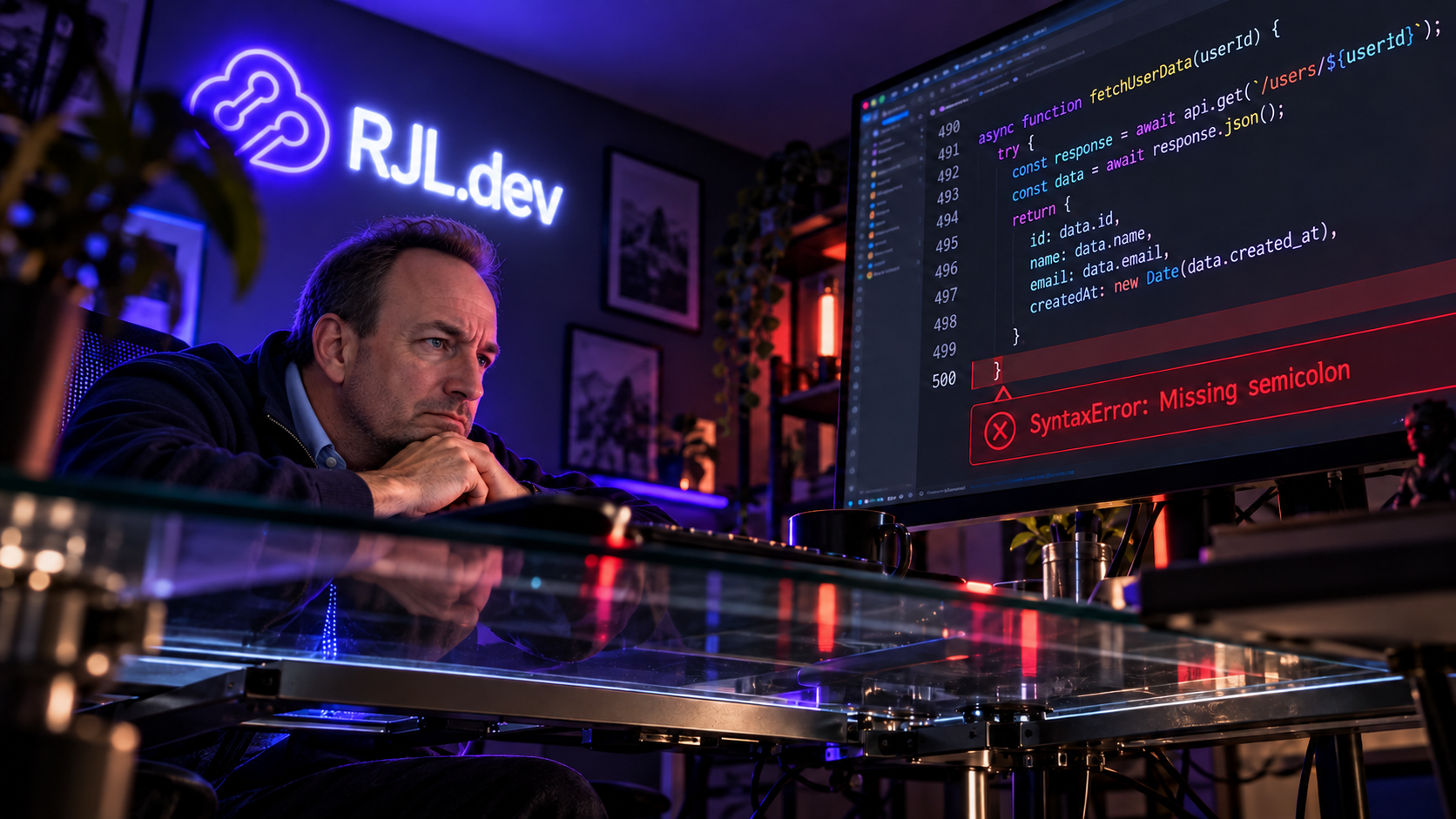
The Work That Remains
None of the following shows up in a percent-written-by-AI number, because that number counts typing. All of it is what a senior engineer is actually for:
- Is this the right thing to build at all, and does the architecture survive scale?
- Where do the PHI, PII, and regulated-data boundaries sit, and who is allowed to cross them?
- Which integration logic looks fine in review and breaks in production six months from now?
- What do we accept, what do we rewrite, and what do we delete entirely?
- Which shortcut is a reasonable trade today and which one quietly becomes a platform constraint?
Complexity does not wait for sprint planning anymore. Un-owned complexity now accumulates at machine speed, which is exactly why the ownership has to be explicit.
What the Evidence Says
- Model reliability decays with task length. METR reports that current models have "almost 100% success rate on tasks taking humans less than 4 minutes, but succeed <10% of the time on tasks taking more than around 4 hours." METR also publishes the honest limit of its own instrument: "Measurements above 16 hrs are unreliable with our current task suite." METR time horizons (sources dated 2025-03 and 2026-05; verified 2026-07)
- Duplication is rising as generation gets cheaper. GitClear found block duplication "climbed from 40.3 in 2023 to 73.0 year-to-date in 2026," and copy/paste "climbed from 9.4% (in 2022) to 15.7% in the first half of 2026" while moved, genuinely refactored code fell from 13% of changed lines in 2023 to 3.8% year-to-date in 2026. Based on 623 million analyzed changes. GitClear maintainability research (source dated 2026-06; verified 2026-09)
- The people accountable for production trust it least. In the Stack Overflow Developer Survey 2025, 66% of developers named "AI solutions that are almost right, but not quite" their biggest frustration and 45% said debugging AI-generated code is more time-consuming. Experienced developers were the most cautious, with the lowest "highly trust" rate at 2.6%. Stack Overflow 2025 (source dated 2025-07; verified 2026-07)
What I Do About It
The practical consequence is that direction has to be owned by a name, not by a process. I put the expensive conversation before the code exists rather than after it lands, keep the quality gates strict as volume climbs, and treat "should this exist, and where does it sit" as a design review in its own right.
That is why "most of our code is AI-written" and "we need a senior engineering leader" show up in the same conversation. Generation got cheap. Someone still has to decide what was worth generating, and carry the consequences when that call is wrong.
Hire Me →