Working With Agents, Not Prompts
Prompt engineering is the old conversation. It is table stakes now. You do not get credit for writing a better prompt. That is how this field moves - yesterday's magic trick becomes today's login screen.
Here is what actually changed for engineering teams: the agents shipping today are dramatically more capable than the ones from six months ago, and most teams are still driving them like autocomplete. That gap is the bottleneck.
Hire Me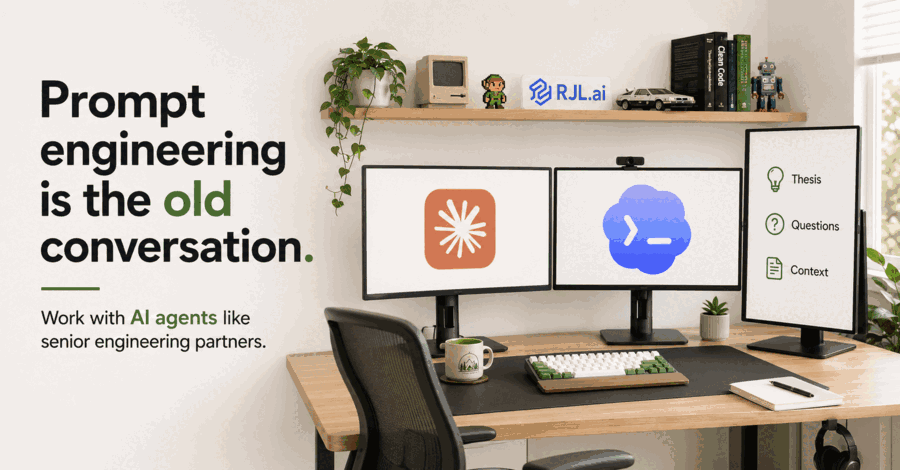
From Junior Engineer to Senior Partner
Not long ago you prompted a model the way you would brief a junior engineer. Tight scope. Explicit spec. Small task. You owned all of the thinking, and the model owned the typing.
Current agents hold far more context, call tools reliably, stay with a task longer, and reason across code, tests, docs, tickets, and architecture decisions. Directing that with a tightly scoped ticket wastes most of what you are paying for. You have to work with them closer to how you work with senior engineers.
"Prompt engineering was never really about the words. It was about intent - and intent is best expressed as a sharp series of questions, backed by enough context to do real work."
This is the same pattern strong technical leaders already use with people. Autonomy with accountability. Context before commands. Room to push back. Clear ownership of the outcome.
Three Things That Change
1. Give direction without over-specifying
Lead with your thesis, not just a task. "I think our auth coupling is slowing deployment. Investigate the service boundaries and show me the trade-offs" beats "refactor auth." One of those is leadership. The other is a ticket.
2. Ask it to wrestle with what good looks like
Not everything fits in an eval. Architecture decisions, modernization paths, platform trade-offs, migration sequencing, and engineering debt all require judgment. So ask better questions:
- What are we optimizing for, and what are we risking?
- What breaks first, and how would we know?
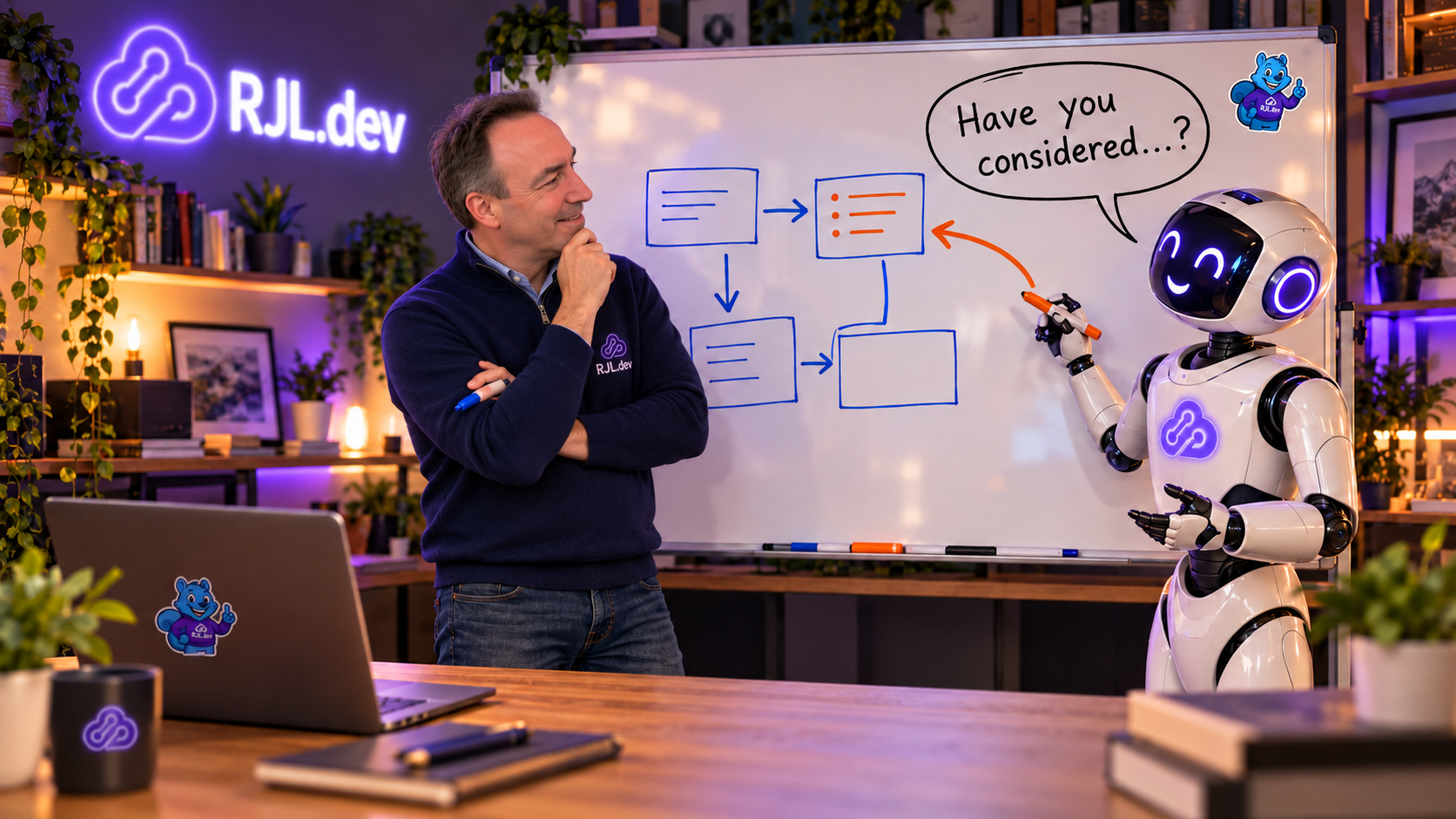
- What would you challenge in this plan? Where am I wrong?
An agent that never disagrees with you is not being agreeable. It is being under-briefed.
3. Force it across the full context
Do not let an agent tunnel into one file and declare victory. Point it at the working set: code, tests, docs, tickets, recent changes, product constraints, operational pain, and your own opinion. Then make it reason across the whole system rather than the first thing it opened.
This is where the leverage moved. Not to the wording of the request, but to the quality of the context and the sharpness of the questions.
What the Evidence Says
- Task length, not task type, is what predicts failure - which is exactly why decomposition is the human's job. METR reports current models have "almost 100% success rate on tasks taking humans less than 4 minutes, but succeed <10% of the time on tasks taking more than around 4 hours," and notes its own suite cannot measure reliably past 16 hours. Give an agent a well-bounded piece of a problem and it performs. Give it the whole problem and it wanders. METR on long-task ability (sources dated 2025-03 and 2026-05; verified 2026-07)
- The dominant failure mode is plausible-but-wrong, not obviously broken - which is what verification has to be aimed at. In the Stack Overflow Developer Survey 2025, 66% of developers named "AI solutions that are almost right, but not quite" their single biggest frustration, and 45% said debugging AI-generated code is more time-consuming. Stack Overflow 2025 (source dated 2025-07; verified 2026-07)
- On deliberately not naming versions: specific model names age out within weeks, and a page that pins them is wrong by the next release. The practice above has survived every model generation I have worked through, which is the point.
What I Do About It
I run a deliberately plural model strategy so work routes to whichever model suits it and no single vendor owns the pipeline. Agent and prompt definitions are versioned and reviewed like code, so behavior is reproducible rather than tribal knowledge living in somebody's clipboard.
And I teach the pattern rather than the tool, because the tool will change. Stop prompting as though the agent is a chatbot. Work with it like a senior technical partner - and hold it to the same standard.
Hire Me →